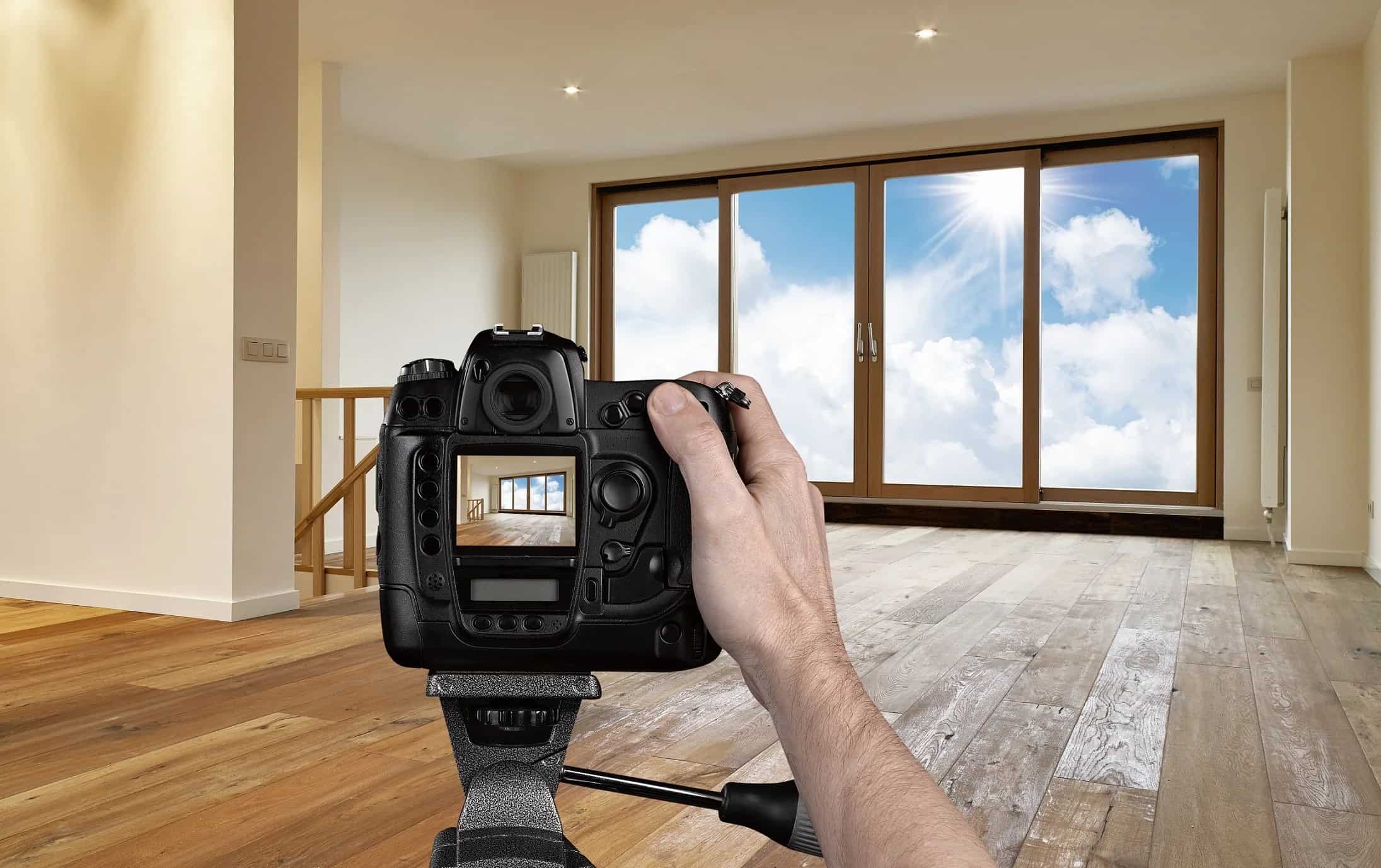
Creating compelling property photographs is essential for attracting qualified buyers and accelerating sales. Professional-quality real estate photos can make listings stand out, with staged homes selling 73% faster on average and 83% of buyers’ agents reporting that staging helps clients visualize properties as future homes.
Essential Camera Equipment and Settings
Lens Selection
A wide-angle lens (16-35mm focal length) is fundamental for real estate photography, allowing you to capture more of a room’s space and make interiors feel expansive without introducing unrealistic distortion. Position yourself strategically in corners or doorways to maximize visible space, and avoid extremely wide focal lengths below 16mm that create a “fisheye” effect that distorts straight lines. Professional software like Adobe Lightroom can correct minor barrel distortion automatically.
Optimal Camera Settings
Consistency in camera settings produces polished, professional-looking results across your entire listing. The recommended configuration is:
| Setting | Recommendation | Reasoning |
|---|---|---|
| Exposure Mode | Aperture Priority | Allows you to control depth of field while camera manages shutter speed |
| Aperture | f/8–f/11 | Maintains sharp details throughout the scene while capturing both property features and surroundings |
| ISO | 100 (or lowest possible) | Minimizes noise and maintains maximum image quality |
| Focus Mode | Single-Shot Autofocus | Ensures precise focusing on key property elements |
| Metering Mode | Multi/Matrix/Evaluative | Evaluates the entire scene for proper exposure |
For twilight exterior shots, increase ISO to 400–800 to capture well-exposed images during low-light conditions.
Shooting Format
Shoot in landscape orientation to capture more space horizontally rather than vertically, which showcases the property’s spaciousness more effectively. Additionally, use RAW format rather than JPEG to preserve maximum detail for post-processing flexibility, especially when blending multiple exposures.
Mastering Light and Timing
Natural Light Strategy
Natural light transforms real estate interiors by making spaces appear brighter, more inviting, and larger. The most effective approach involves opening all curtains and blinds fully to flood rooms with daylight, which creates a welcoming ambiance. During daytime shoots, turn off interior artificial lights to avoid mixed color temperatures (the warm yellow of bulbs conflicting with cool daylight), which creates an unnatural appearance.
Golden Hour Advantage
Photograph exteriors during the “golden hour” (shortly after sunrise or before sunset) to capture warm, soft light that minimizes harsh shadows and highlights properties in their most flattering appearance. Twilight shots prove especially striking, capturing the warm glow of interior lights combined with the soft colors of sunset and landscape lighting in a single compelling image.
Advanced Lighting Techniques
High Dynamic Range (HDR) photography is the professional standard for capturing the full spectrum of light in challenging scenes where windows are bright while interiors are darker. This technique involves:
- Using your camera’s auto-exposure bracketing (AEB) setting to capture 3–5 exposures with 1–2 EV (exposure value) differences
- Maintaining a tripod for perfect alignment across all bracketed shots
- Merging RAW files in dedicated software like Adobe Lightroom, Photomatix, or Aurora HDR rather than relying on in-camera HDR for maximum quality control
For rooms needing additional light, use reflectors (simple white foam boards) to bounce natural light into dark corners, brightening them without introducing harsh flash.
Composition and Framing Fundamentals
Room Photography Approach
Avoid excessive close-up shots of individual corners. Instead, aim to include three walls in each image to provide depth and spaciousness. Positioning your camera at chest height and shooting straight-on (avoiding fish-eye or aerial angles) creates a realistic perspective that viewers naturally relate to. This positioning portrays rooms as expansive, roomy, and airy rather than closed and narrow.
Creating Visual Interest
Take multiple shots of each room from different angles to discover the most compelling perspective and ensure maximum flexibility during the editing phase. Strategically use reflections from mirrors or windows to add depth and dimension to images while avoiding unwanted reflections of camera equipment or yourself.
Capture detail shots of standout features like fireplace stonework, marble countertops, or custom architectural elements using a zoom lens, as these intimate views provide information unavailable in wider shots.
Curb Appeal and Exterior Photography
The exterior creates the crucial first impression, often determining whether buyers even view the property’s interior. Mow lawns and trim hedges, clear driveways and pathways of vehicles and obstructions, power wash siding and walkways to remove grime, and upgrade front door areas with fresh paint or welcoming plants. Ensure all outdoor lighting works properly for evening shots.
Strategic Property Staging
Decluttering and Personalization
Professional staging removes 83% of potential visual distractions and sets the psychological stage for buyers to imagine themselves living in the space. Remove oversized or excess furniture that makes rooms feel cramped, keep kitchen countertops minimal with only essential decorative elements, and temporarily pack away family photos, diplomas, and personal memorabilia. Conceal electronics, cables, and pet-related items, as visible wires and clutter create visual noise that distracts from the property itself.
Furniture Arrangement
Position furniture at slight angles rather than against walls to add dimension and guide the viewer’s eye through the room. Maintain open pathways that don’t obstruct walkways, and strategically remove excess seating or tables if spaces feel cramped. Using matching lamps, nightstands, or chairs creates visual harmony and suggests order.
Finishing Touches
Small details prove surprisingly visible in high-resolution photographs. Fluff pillows and smooth bedding, align blinds and curtains evenly, wipe down all surfaces to remove dust and fingerprints, and ensure all light bulbs work (non-functioning lights suggest maintenance issues to buyers). Fresh flowers or high-quality potted plants add warmth and texture without overwhelming the decor.
Creating a Shot List
Develop a comprehensive shot list before the shooting day, prioritizing the property’s key selling points and unique features. Include exterior shots showcasing curb appeal and design, interior shots of all bedrooms, bathrooms, kitchens, and living spaces, lifestyle-focused images highlighting special features (fireplaces, pools, outdoor entertaining spaces), and detail shots of architectural elements or luxury finishes. This approach ensures you capture the property’s complete visual story even if time becomes limited during the shoot.
Professional Post-Processing
Choosing Edit Software
Adobe Lightroom is the industry standard for real estate photo editing, offering efficient batch processing for large photo libraries, precise adjustments without image degradation, and built-in tools specifically for real estate workflows like lens correction and perspective adjustment. The non-destructive editing approach means all edits remain reversible, allowing experimentation without risking original image quality.
Essential Editing Steps
Adjust color temperature to create warmth and inviting atmosphere, balance luminosity to ensure all areas are correctly exposed without overexposed or underexposed sections, increase contrast to enhance visual appeal and highlight critical details, and correct vertical lines to eliminate the amateur-looking effect of converging walls and door frames.
Create presets from your editing of the first image, then apply these settings to similar photos (identical rooms or lighting conditions) simultaneously using Lightroom’s Sync function, dramatically accelerating workflow while maintaining consistency across the entire listing.
Advanced Techniques
Drone Photography
Aerial photography has become increasingly important for luxury and large properties. Recent studies show that aerial photos help sell properties up to 68% faster, with drone photography increasing engagement by 83%. Drone technology is becoming more affordable and accessible, making it a valuable addition to any photographer’s toolkit.
Creating Variety
Photograph the property at different times of day to showcase its versatility: capture exteriors during golden hour for warm, inviting glow; photograph interiors during daytime to highlight natural light and spaciousness; and create twilight shots with illuminated windows and landscape lighting for stunning ambiance.
Consistency Standards
Maintain consistent editing and composition across all listing photos to create a polished, professional appearance. Use landscape orientation for all interior and exterior shots, apply uniform editing styles across similar room types, and ensure all vertical lines are straight and properly aligned for a stable, professional appearance.
Key Performance Indicators
Professional real estate photography directly impacts listing performance. Properties with properly staged and professionally photographed interiors achieve faster sales, higher final selling prices, and increased buyer interest. The investment in quality photography—whether through professional equipment, lighting techniques, or post-processing—returns significant value through accelerated sales cycles and enhanced property presentation.